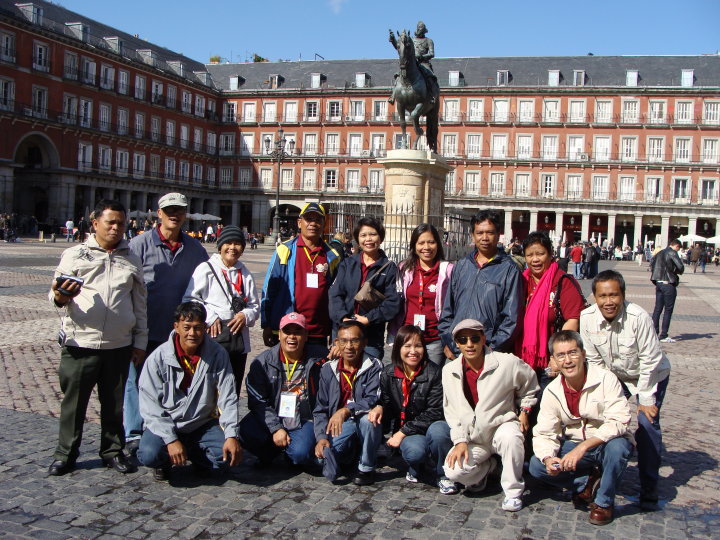
A souvenir photo among the 25-member Philippine Delegation to the Study Visit on the Development of Cooperative Integration in Spain taken on April 19, 2009 at Plaza Plaza Mayor in Madrid City, Spain. Standing from left to right are: Almar Autida, Ernesto Parato, Caridad Vargas, Antonio Betasolo, Isabelita Ocampo, Jodel Tabada, Reynaldo Rosales, Aloha Gigi Banaria and Edelito Sangco. Seated from left to right are: Jerry Mercado, Mario Espiso, Levi Sta. Ana, Sr., Luz Brenda Balibrea, Alvin Paul Dirain and Nielo Tingson.
IV. ACTUAL CONDUCT OF STUTY TOUR
Day 1: (April 18, 2009)
The SAIS-BC participants to the Study Trip left Manila for Spain via Doha, Qatar.
Day 2: (April 19, 2009)
The group arrived at Barajas Airport in Madrid at 9:00AM (local time in Spain) via Qatar Airways. Ms. Katia Oceransky met the group and toured in the historical spots of Madrid before proceeding to Toledo in theafternoon. In Toledo, the group checked in at Hotel Euro Star and had another guided tour around Toledo City.
The tour in the historical sites of Madrid and Toledo was done not just for site seeing purposes but for the participants to understand the history of Spain and how cooperatives in Spain evolved.
Day 3: (April 20, 2009)
Visit No. 1: CEDERCAM- Asociacion Para El Desarollo Rural De Castilla La Mancha (Castilla La Mancha Network for Rural Development)
Time: 9:00 AM
Site: Rio Valdyernos, Bajo, Toledo City, Toledo, Spain
CEDERCAM is a network of Groups for Rural Development in Castilla La Mancha with experiences in promotion, support and participation of cooperatives. The group supports the agricultural activities in Castilla La Mancha particularly in agricultural modernization and trade and commercialization as well as in the diversification of the agrarian economy especially in rural development. It is composed of twenty nine (29) rural development groups in the Community of Castilla-La Mancha, an autonomous regional government composed of the five (5) provinces of Albacete; Ciudad Real; Cuenca; Guadalajara and Toledo with Toledo City as the regional capital. The primary role of the network is to coordinate the activities of each of the rural development groups in the region.
The various rural development groups served as clearing house for various rural development projects and initiatives in their respective township or municipality in such a way that the group prepares the Community Development Plan, incorporating therein the list of priority programs and projects for inclusion in the Provincial and Regional Development Plan. The funds to support the various programs and projects embodied in the Regional Development Plan shall be sourced from the European Union (75%); National Government of Spain (12.5 %) and; Autonomous Community or the Regional Government of Castilla-La Mancha (12.5%). In effect, the total rural development budget for the autonomous regional community is split among the various rural development groups depending on the village needs and situation.
Mr. Vicente Ita, the President of CEDERCAM and President of a cooperative in Guadalajara province and Mr. Jesus Fernandez, head of one of the biggest agrarian cooperative in Cuenca province, shared to the group their experiences in cooperative development and integration.
Mr. Ita explained to the group the balance of social movement. He informed the body on how CEDERCAM was formed and its composition. CEDERCAM is formed by different groups composed of social and rural agencies (rural development workers, women groups, agricultural workers, etc). Of this composition, 50% is composed of the social agents (comprising the cooperatives, people’s organizations and other sectors based in the township or municipality) and the other 50% is by the local government representatives (representatives of the local government unit and other government agencies). As such, there is a balanced representation between the private and the government. CEDERCAM is governed by the General Assembly (the highest policy-making body just like here in the Philippines), President, Board of Director, and the Technical Group.
He also informed the group that his cooperative is not focusing much on agriculture but venturing into diverse activities like communication, tourism, commerce and other services that support rural development.
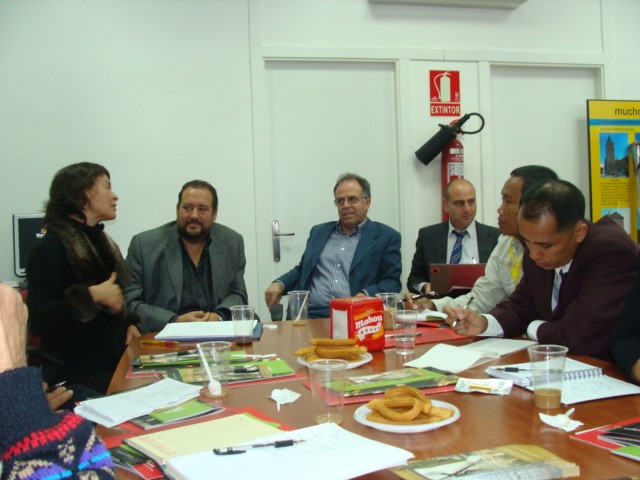
Mr. Edelito Sangco from Socorro Empowered People’s Cooperative (SOEMCO) in Caraga Region listens intently to Ms. Katia Oceransky as she translated the talk of Mr. Ita into the English language while Mr. Alvin Paul Dirain from the Department of Agriculture, Central Office seriously takes notes.
Mr. Fernandez on the other hand shared to the group how they started their cooperative and how it grew. He informed the group that when they started in 1988, they only have 10 members. In order for them to compete in the market, the 10 farmers decided to form a cooperative. The other problem which prompted them to form a cooperative is the decreasing number of inhabitants in the area. Most of the young people tend to migrate in the cities to look for better job opportunities making the ratio down to 4 person / sq. km. Through the cooperative, and by increasing the rate of commercialization, this will create more opportunities for young inhabitants which will encourage them to stay in the area. Now, they have 1,200 members composed of women, young farmers and old people. With the support of the European Union (EU), the agrarian common policy (APC) pushed for the increase in size and increase in level of cooperatives.
Generally, cooperative development is equated with rural development in Castilla-La Mancha. This is because Cooperatives are the only business establishments that exists in Castilla La Mancha. This is the main source of employment of the rural people. Agricultural production and marketing (wines, grains, garlic, sunflower, mushroom) are the main business undertakings of the cooperatives in Castilla-La Mancha though some cooperatives are engaged in diversified activities like housing, shops (stores),adventure tourism (horse riding, balloon riding, tour train) and small-scale hotel operation. The average farm family production area in the region is 70 hectares, though not necessarily owned by an individual farmer, wherein, in some instances only 5 hectares is owned by a farmer and the rest is rented or leased.
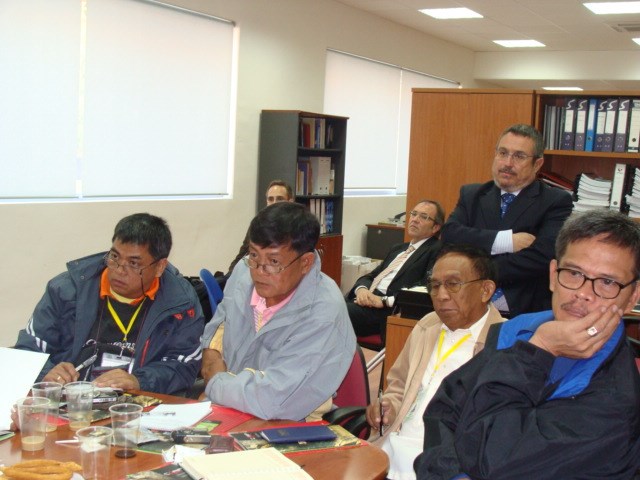
Mr. Mario Espiso from Labo Progressive Multi-Purpose Cooperative in Bicol Region, Mr. Roger Mercado from MLGU-Goa, Camarines Sur, Mr. Levi Sta. Ana, Sr. from Liga ng mga Barangay Multi-Purpose Cooperative in Bicol Region, and Mr. Ernesto Parato from the Department of Agriculture – Region 5 pay serious attention to the talk of Mr. Fernandez.
Mr. Fernandez stressed that no matter how big is the support from the government, the cooperative needs to be efficient in order to succeed. If the cooperative is inefficient, it is the management that is not good.
He further stressed that there are two (2) main factors that help cooperatives grow in Castilla-La Mancha: First is the fidelity of the members and the other is the efficient production and commercialization. On the fidelity aspect, the members possess the right attitude to elect good leaders in the Board of Directors. In return, the Board selects good managers. As a result, there is no leadership problem in the cooperatives of Castilla-La Mancha. In the aspect of production and commercialization which applies mainly to producers’ and marketing cooperatives, there should be product dimension in such a way that volume and quality is a primary concern to attain the best market as possible.

Ms. Jodel Tabada and Ms. Isabelita Ocampo, both from the Department of Agriculture – Regional Field Unit No. 13 (Caraga), as well as Ms. Caridad Vargas from Macutal Farmer-Producers Cooperative in Bicol Region take notes while listening to the speakers from CEDERCAM.